


Franciacorta

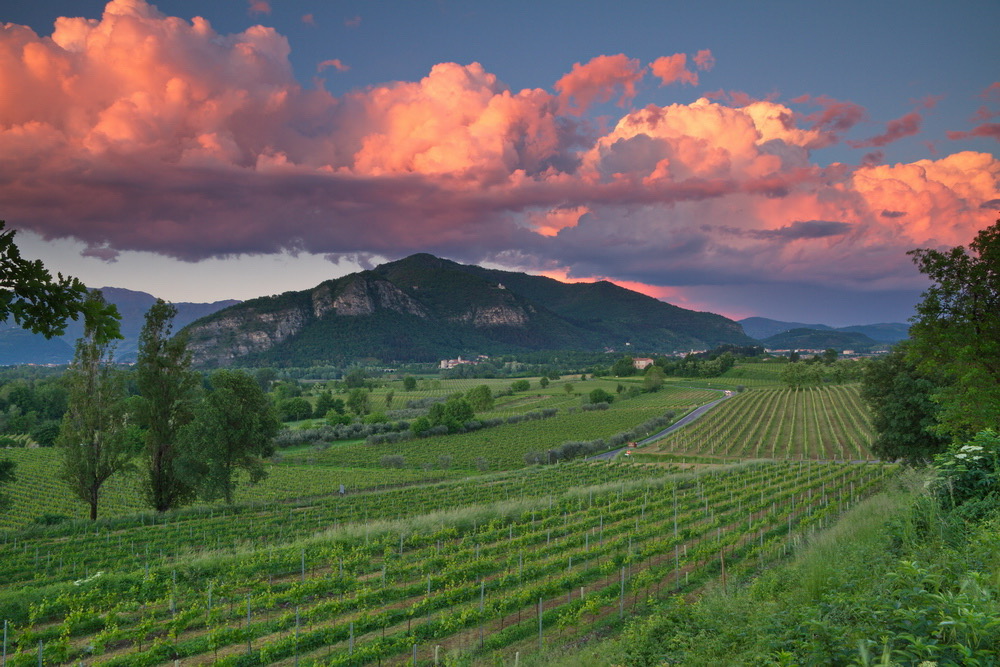
The geographical boundaries are delimited by clear landscape differences: to the north the area of Lake Iseo, to the east the hills, planted with vines, to the west the park of the Oglio river and to the south the Monte Orfano which rises gently over the plains.
The name "Franciacorta" is of uncertain origins: initially it was thought to be due to the French domination of the Middle Ages, a domination subsequently ousted by the Venetians who defined it geographically.
The most accredited hypothesis, however, is the one that derives the name, in the early Middle Ages, from the Latin "Curtes Francae", which in Italian became "Corti" or communities, trading centers of the Benedictine monks settled in the hilly area near Lake d 'Iseo, and "Franche" ie exempt from paying duties, to nobles and clergy, for transport and trade.
This exemption was due to the fact that the friars reclaimed the territories of marshy origin assigned to them and taught the peasants the techniques of cultivation of the fields.
The winemaking tradition is very ancient and prehistoric pips have been found, but it was in the Middle Ages that this area began to devote itself to the production of wine, especially the full-bodied red, supplying the city and the nearby mountain valleys.
What makes it famous today, however, is not the red wine but the sparkling wine.
This is obtained from Chardonnay and / or Pinot Nero and / or Pinot bianco grapes, and recently the use of another grape called erbamat or mad grass (typical of this area) which notoriously gives a lot of acidity to the wine, has been allowed. Wines are increasingly in need of this acidity due to global warming which leads to the production of more and more ripe grapes from year to year.
The Franciacorta DOCG denomination includes three types of sparkling wine:
"Franciacorta" (White) which can be produced with the above grapes including the red ones (the skins of the red grapes are removed after pressing and not macerated);
"Franciacorta Saten" which can only be produced with white grapes of the above, and has a greater gustatory softness due to its lower atmospheric pressure in the bottle;
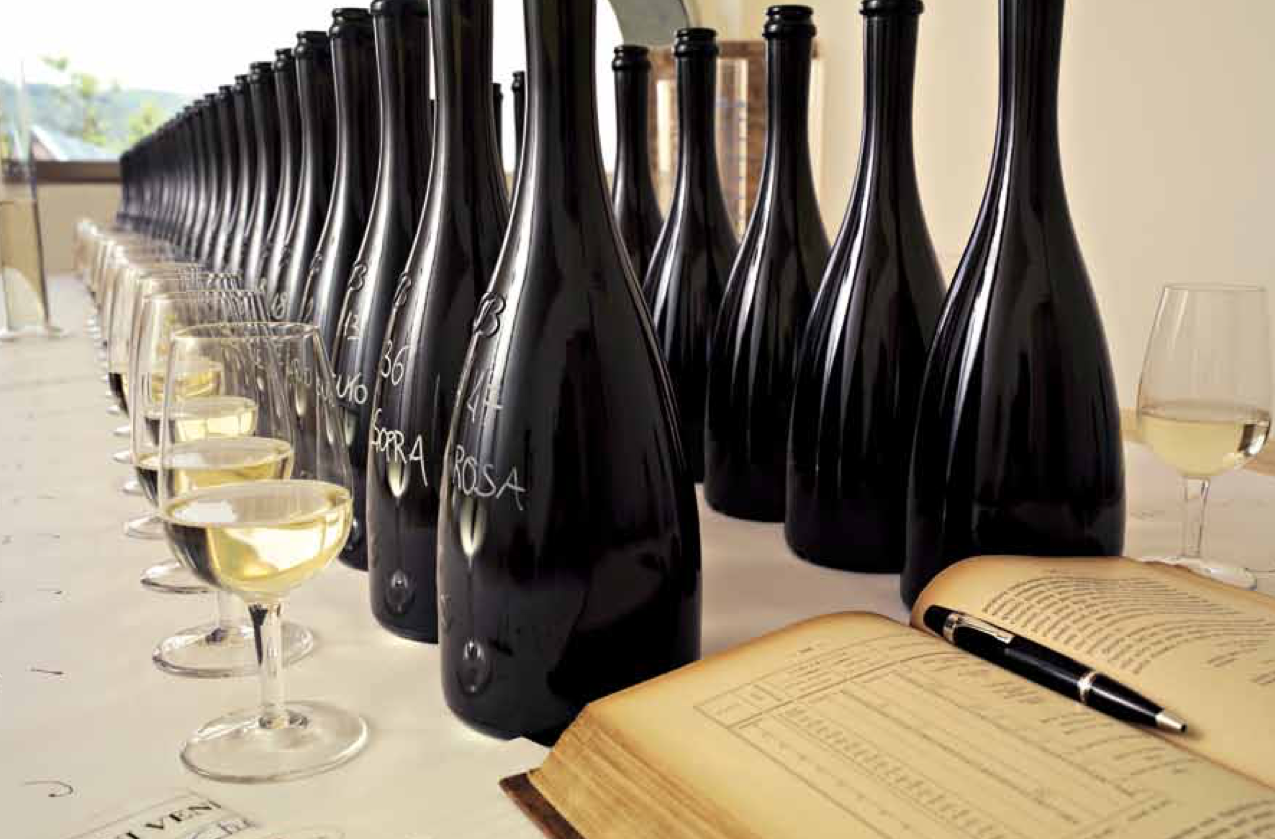
"Franciacorta Rose" which can be produced with the above grapes with at least 25% Pinot Noir.
These wines can be and are almost always blends of different vineyards and different vintages, but in vintages of exceptional quality some wineries produce wines with grapes all of the same vintage, indicating it in the bottle: this category is known with the name "Millesimato" or "Millesime".
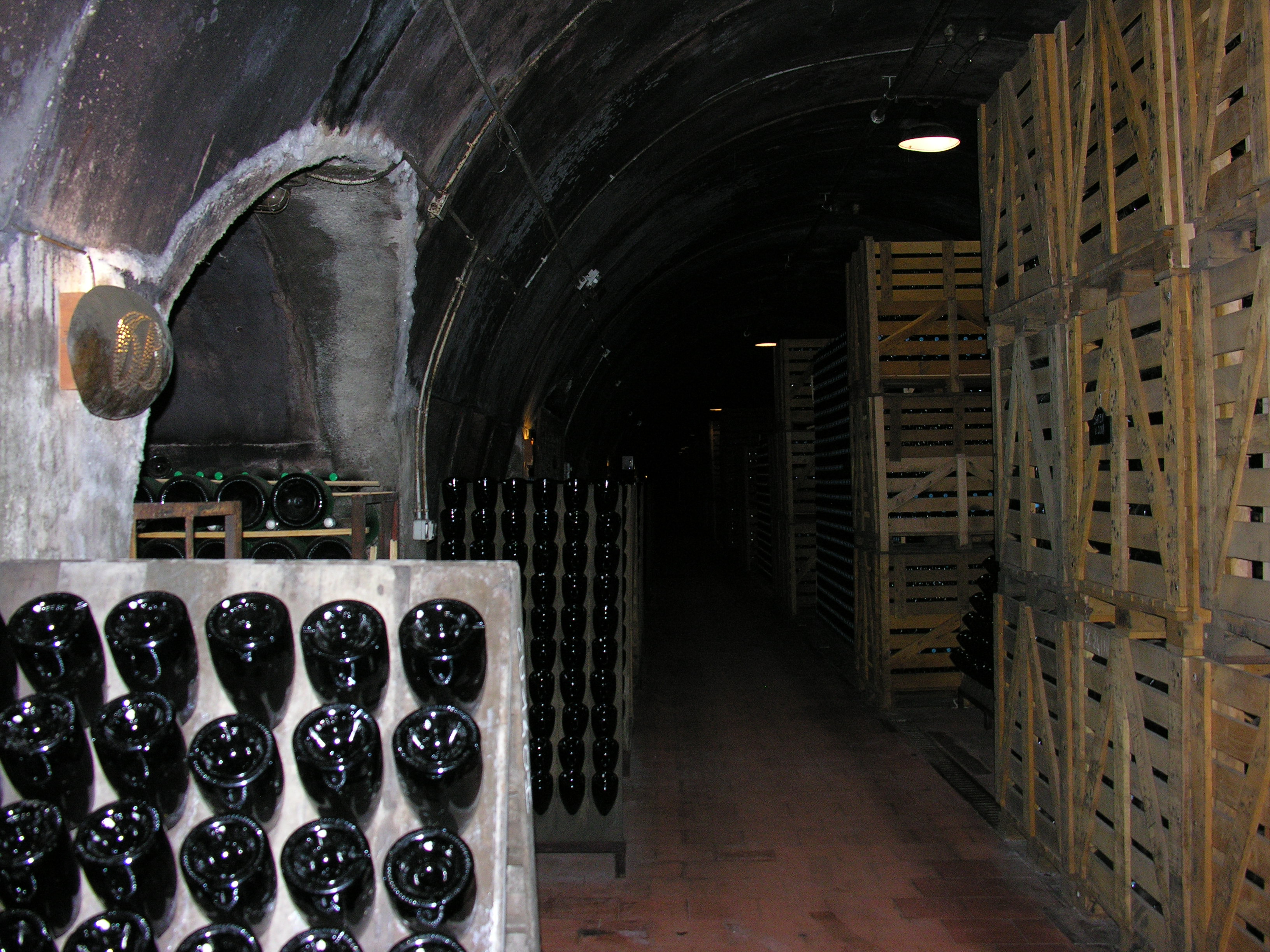
Vintage wines, if they rest on the lees for at least 60 months, are indicated in the bottle with the word "Riserva".
The "Terre di Franciacorta" DOC designation is used for the production of still (white and red) wines.
Always present traditionally in parties, and in relevant occasions, the sparkling wines owe this tradition to Romans, that not having available the traditional bottle resistant to the pressure of the bubbles discovered hundred of years later by the monk Dom Perignon, they produced them in terracotta amphoraes that often burst, minimizing the stock of this wine, making it so rare to be saved only for special occasion.
Recommended producers: Ferghettina (Milledi), Solouva, Arcari e Danesi, 1701, Cavallari, Mosnel, Enrico Gatti, Bellavista, Ca del Bosco, Contadi Castaldi, Vezzoli
Ready for a ride on ancient evocative medieval routes shadowed by imperious and elegant cypress trees to visit wineries and vineyards?
Contact me for a wine and gourmet experience in Italy with your own Sommelier.
Reservation form


