


Costa d'Amalfi

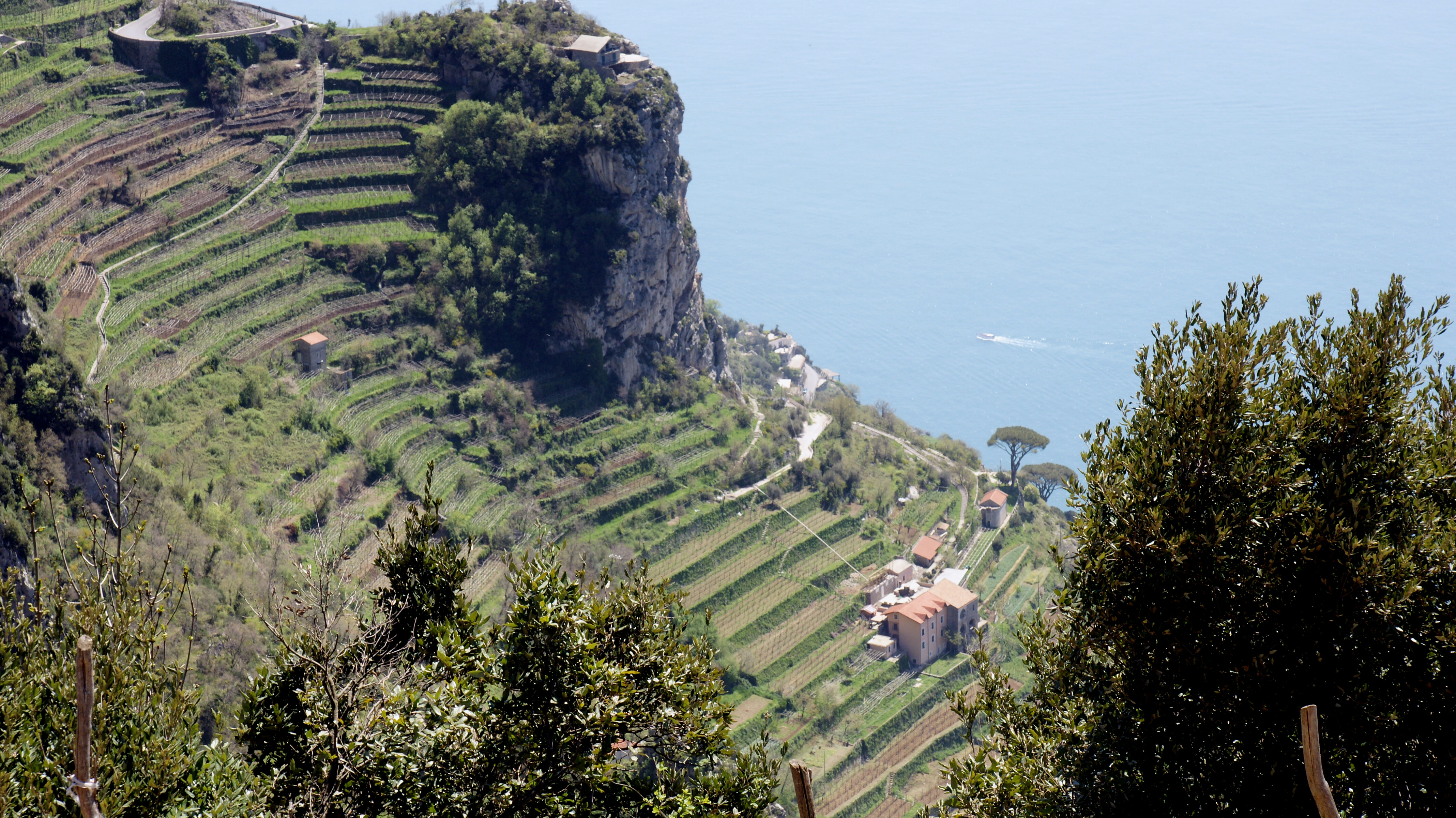
These inaccessible and difficult to reach areas were chosen by the neighboring populations because they were excellent for protecting themselves from the barbarian invasions after the fall of the Roman Empire.
These same geographical characteristics, in more recent times have preserved viticulture from the invasion of tourism which in other more accessible areas such as Capri has supplanted the production of wines with the uprooting of the vineyards in favor of the construction of tourist facilities.
With its vineyards overlooking the sea from a height that can even reach 600 meters, here the landscape is wonderful and viticulture is defined as heroic as it is really difficult to work the land, in fact the vines are arranged on terraces with retention dry stone walls and often not only not accessible (fortunately) to machines, but often not even to animals so everything must be done by hand. (see photo)
Here the land to cultivate was brought by men on the shoulders.
Sometimes the grape plants (often ungrafted) are not planted vertically but instead in the horizontal one coming out of the dry stone walls on the steepest terraces and so the hills are carpeted with these pergolas whose clusters leave the possibility to the plant on the ground vegetables.
This two-storey agriculture is typical of the Land of the Sirens that these ravines live in, to gain space in an area where you struggle every day with the rock and to better retain moisture.
Here there is the southern sun but also so much cold and marked temperature variations that are the ideal conditions for producing white wines of great elegance.
The Doc Costa d 'Amalfi has three sub-areas where the finest wines are produced, Furore, Ravello and Tramonti and includes white, rosé and red wines with types including Spumante Metodo Classico (refermentation in the bottle) and passito.
.jpeg)
Furore takes its name from the wind that flows with "fury" between the gorges on the slopes of the Lattari mountains, Ravello comes from Rebello and refers to the choice of its inhabitants to remain faithful to the Normans when the republic of Amalfi of which they were part rebels to the Normans and Tramonti obviously refers to the beautiful Sunsets that can be observed on the sea with the background of vineyards and lemon groves.
The white grapes used are mainly Falanghina and Biancolella, locally called Biancazita and Biancatenera, Ripolo, Fenile, Pepella, and Ginestra the red ones Aglianico, Piedirosso (locally Per'e palummu), Tintore and Sciascinoso locally called Olivella.
Here all the operations in the vineyard must be done manually, and therefore are expensive, therefore there are no mass wine producers but only small wineries.
Therefore it is difficult to find low quality wines, only 350,000 bottles are produced.
Some producers whose wines are present in the United States:
Marisa Cuomo, Ettore Sammarco, Giuseppe Apicella
Ready for a ride on ancient evocative medieval routes shadowed by imperious and elegant cypress trees to visit wineries and vineyards?
Contact me for a wine and gourmet experience in Italy with your own Sommelier.
.jpeg)
Reservation form


