


Brunello di Montalcino

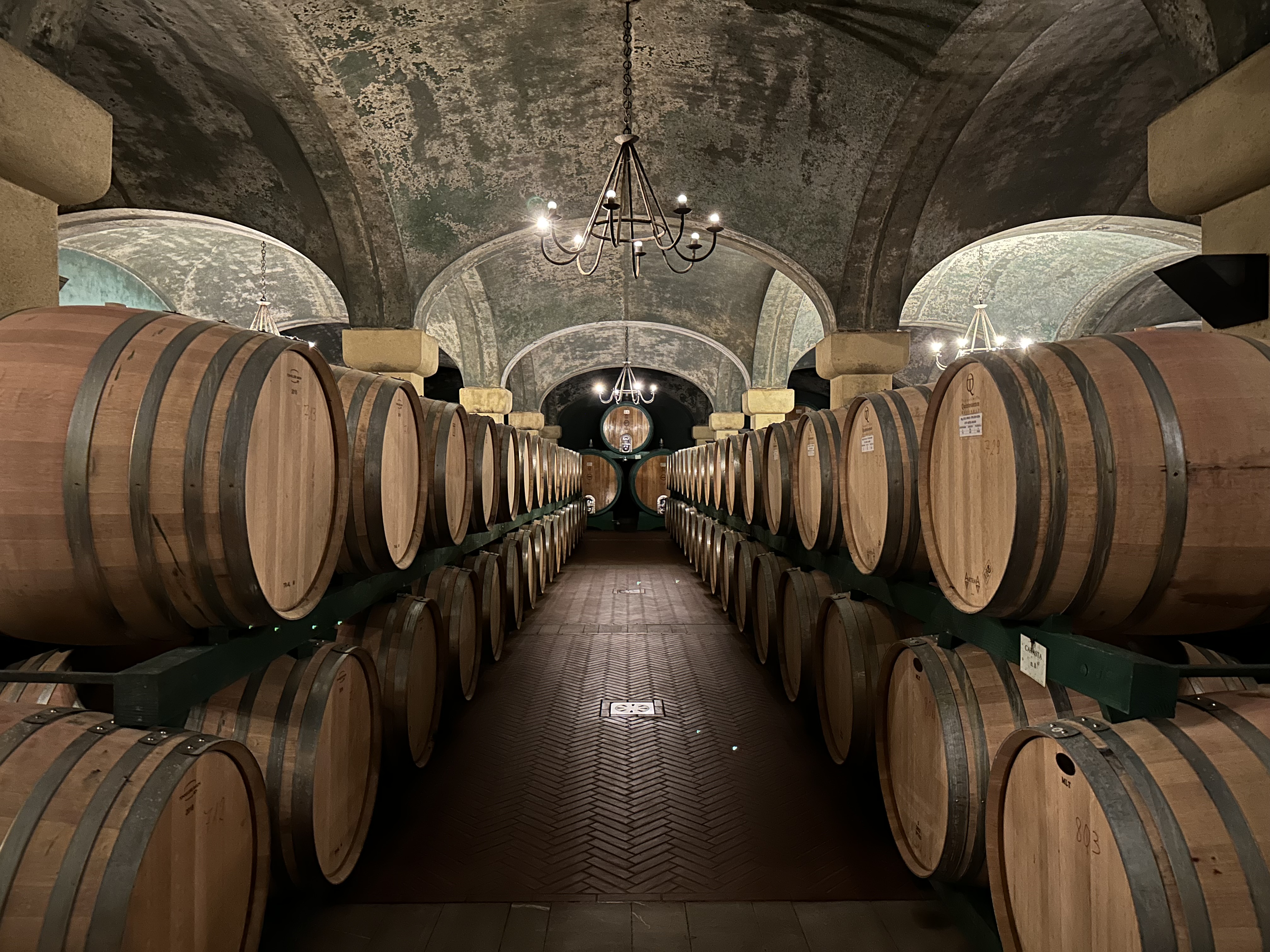
There is evidence that Brunello was already produced in the 14th century, Leandro Alberti praised its quality as early as 1550, Cosimo Ridolfi in 1831 but officially its first year of production is 1888.
It is produced from the Sangiovese grape such as Chianti.
However, it is made with a clone called Sangiovese "Grosso" different from the one used for Chianti which is instead called "Spargolo".
In Chianti the "Spargolo" (sparse, scattered) was chosen because before being reclaimed, there were swamps in that area and the humidity that came from them made the grapes rot, so the "Spargolo" clone whose graes do not touch one another but are far from each other was the solution to the problem.
In Montalcino, on the other hand, the climate is dry and even the "Tramontana" wind that comes from the sea dries the water inside the bunches, concentrating the flavor of the grapes, so Sangiovese grosso can be used.
The Sangiovese “Grosso” is nicknamed Brunello due to its dark color (brune), the suffix -ello means small, therefore brunello = the little dark one.
In fact, the grapes are quite small compared to the average and the word big describes the thickness of the skin and not the size of the grape. The thicker skin gives more tannins to the wine.
This clone was selected by the one who is considered the progenitor for the production of Brunello di Montalcino wine, namely Clemente Santi.
His son Ferruccio created the first modern version (for that time) of this wine by letting it age in large Slavonian wooden barrels for 10 years. Slavonian oak is more neutral than French and American oak and gives less wood and less tannins to the wine, and in the case of Sangiovese there is certainly no need to add tannins as the wine produced from this vine is naturally rich of them. .
Ferruccio's son Tancredi hid the finest bottles (reserve version) of this wine during World War II before they were confiscated by the Germans by walling them up in one of the cellars.
In the following years, a considerable amount of verticals from old vintages were found and the ability of this wine to age superbly was noted.
The color of this wine is intense ruby red tending to orange with aging.
On the nose we find aromatic herbs, red fruit (plum, marasca or amarena cherry) and berries together with balsamic notes and spices and with aging and the increase in tertiary aromas also goudron and flint.
On the palate the wine is very robust, with gret minerality, excellent acidity and intense tannins.
In other words, a wine of legendary complexity and longevity
The traditional food pairings with Brunello di Montalcino are game and aged cheeses such as Parmigiano Reggiano and Pecorino.
Recommended producers: Gianfranco Solderà, Costanti, Le Chiuse, Cerbaiona, Terre nere, Le Potazzine, Biondi Santi, Ciacci Piccolomini d’ Aragona
Ready for a journey on ancient medieval itineraries in the shade of majestic and elegant cypresses to visit wineries and vineyards?
Contact me for a food and wine experience in Tuscany with your private Sommelier
Reservation form


